
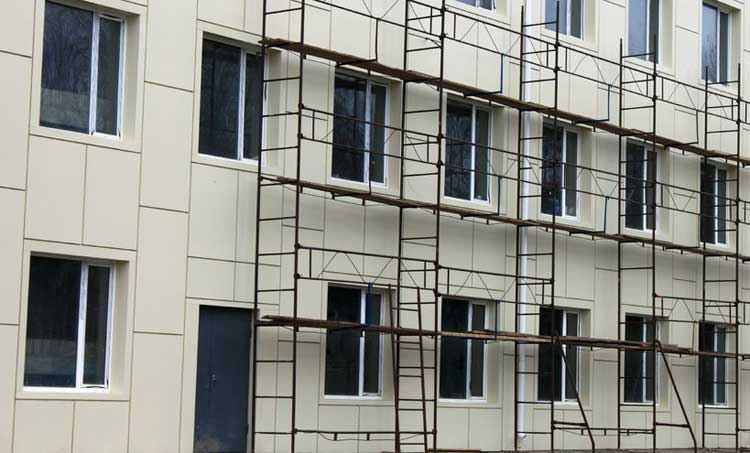
With the renovation market booming, it is no surprise that investors are seeking financing for homes and other properties they plan to refurbish and sell.
For a property to qualify for a traditional mortgage, it must be deemed habitable. This means the building must be wind— and water-tight, and have a fully functioning bathroom and kitchen.
Since investors generally look for good deals on a property through a short sale or auction, chances are the property they purchase would not be considered habitable without serious renovations, which may also need to be financed.
Since a conventional mortgage is not an option for these types of renovation properties, investors will need to seek financing for their projects through other methods.
When essential items such as modern plumbing and wiring, modern u-PVC double-glazing, and updated gas central heating are not present at a property or home, lenders will withhold funds, either in part or in full, until these items are remedied.
Unless the investor has his or her own cash flow, he or she will likely need to secure additional financing to make the necessary property refurbishments. When this situation arises, specialist lenders are available to help fund these projects.
These lenders will arrange finance in the form of bridging or other short-term loans and are not concerned with the property’s condition when extending financing. Because of this, bridging finance has become a popular option for those investors looking to refurbish a property.
But before going out to secure financing, it is important to know a little more about the refurbishment type – there are two types of refurbishment that can be done to a property: light refurbishment and heavy refurbishment.
Information on Light Refurbishment
Light refurbishments to a property generally involve internal work. Internal work can include updating bathroom and kitchen fittings, re-plastering walls, updating electrical or plumbing work, and even simple redecorating. As a general rule of thumb, a light refurb can include any work that does not require planning or construction consent or a change of use.
A loan for light refurb projects is available at standard bridging loan rates, which usually begin at about 0.85 per cent per month and can go up to 50 per cent of the property’s Loan to Value (LTV). In some cases, these loans can reach 0.95 per cent per month with an LTV of up to 60 per cent or even 1.15 per cent per month and up to 70 per cent LTV on the property. It is important to note that the percentages and LTV rates listed here are based on the maximum gross loan amount, including retained interest.
Information on Heavy Refurbishment
In contrast to the parameters that outline light refurbishment, heavy refurbishment includes any work that requires planning permission from the local authority or a change of use of the property. For example, heavy refurb would include conversion of an office building into flats or a public house into an HMO property.
The terms of heavy refurb loans also vary from those available for light refurbs. Heavy refurb loans have a maximum LTV of 65 per cent, although a higher LTV may be available if additional security is provided. Rates for heavy refurbs are also slightly higher than those for their counterparts, usually averaging up to 1.45 per cent per month.
Since more work is being done on the property, lenders will see it as higher risk, which means the loans will be more expensive to cover potential losses. When it comes to major refurbishments, lenders will often want additional information about the property and the project to ensure they are financing a good investment.
Lenders often ask for a detailed schedule of the property’s construction process and a detailed cost breakdown for the project. They will also consider the surveyor’s comments, especially whether the scale of spending matches the work that needs to be done.
Surveyors often note the property’s day-one value and estimate its value after the work is completed. Experience in the refurbishment field is vital to securing a bridging loan at great rates—lenders will consider an investor’s track record when making a final decision.
Exit Routes Options
Lenders will also take a close look at the borrower’s exit route, or exit strategy, when repaying a light or heavy refurb loan, and will often require a written exit route as part of the loan’s terms. Generally, for renovation properties, the exit route is the subsequent sale upon completion of the refurbishments.
If this is the chosen route, lenders will also consider the property’s end value when making a decision. Another option for an exit route is refinancing the property, which would call into question the borrower’s ability to obtain a mortgage.
Transitioning the property into an HMO or buy-to-let is an additional option; in this case, the borrower will need to provide rental coverage calculations to the lender. Bridging loans generally carry the stigma of being the most expensive form of financing.
Although bridging loans carry higher interest rates, the ability to use them for refurbishment projects before securing a traditional mortgage is a powerful tool for property investors. Since the property’s condition is not brought into question with this type of financing, it is usually the only option an investor has when crucial upgrades are needed to secure a mortgage or sell the property outright.
A loan broker can often provide a potential borrower with all the information they need on light and heavy refurbishment finance to make the best possible decision for their particular situation. Contact Jubilee today, and one of our friendly advisors will gladly discuss your financing requirements.